
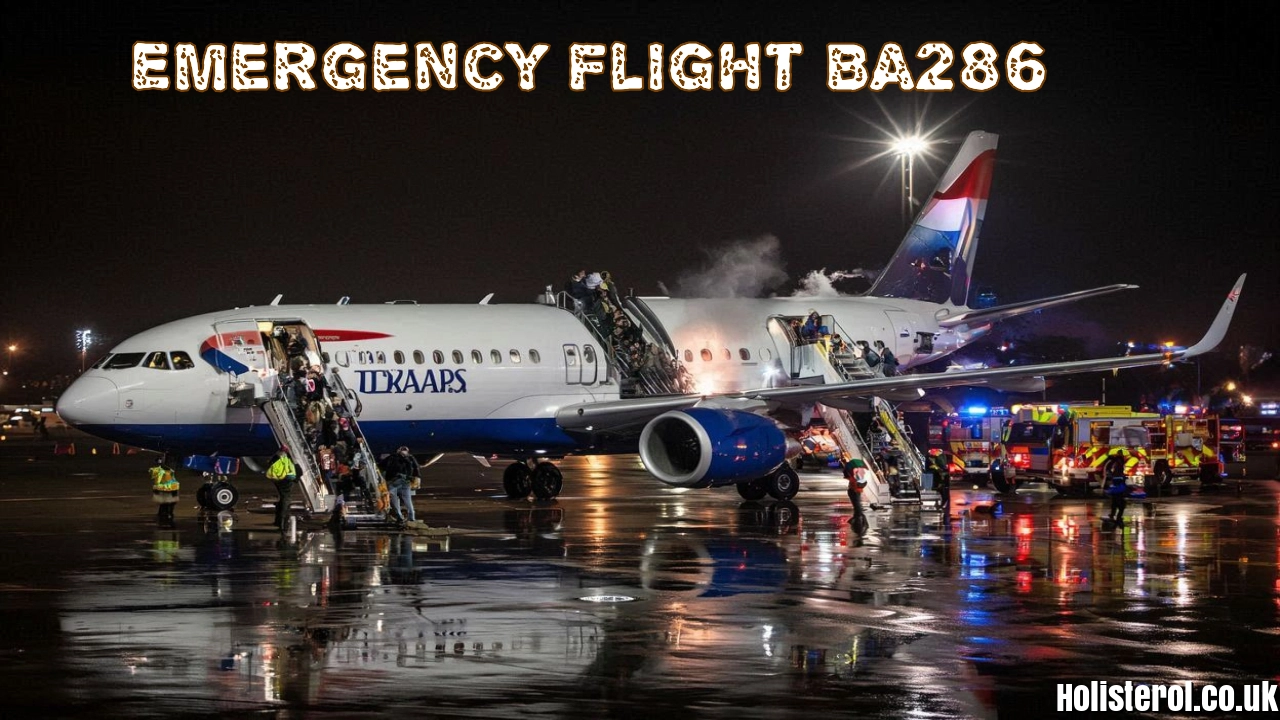
Overview of British Airways Flight BA286 Emergency
The British Airways Emergency Flight BA286 on May 27, 2025, drew significant attention in the aviation world. The flight, operated by an Airbus A380 (registration G-XLEG), was traveling from San Francisco (SFO) to London Heathrow (LHR) when it declared a general emergency (Squawk 7700) while flying over Scotland.
At the time of the incident, the aircraft was cruising at approximately 41,000 feet, a typical altitude for long-haul flights. The emergency declaration immediately alerted air traffic control and aviation monitoring systems, prompting priority handling for the aircraft. Despite the seriousness of the situation, the flight continued under controlled conditions.
What Does Squawk 7700 Mean?
Understanding Aviation Emergency Codes
In aviation, “Squawk 7700” is a universal transponder code used by pilots to indicate a general emergency. When this code is activated, it signals that the aircraft requires immediate attention and priority clearance from air traffic control.
Why It Matters
Declaring Squawk 7700 does not always mean catastrophic failure. It can be triggered by various issues, including:
-
Cabin pressure concerns
In the case of BA286 (2025), the emergency was reported to be medical-related, which is one of the most common reasons for such declarations on long-haul flights.
Cause of the 2025 BA286 Emergency
Medical Emergency Onboard
The primary reason behind the BA286 emergency was a medical situation involving a passenger or individual onboard. While full details were not publicly disclosed, such incidents typically involve serious health concerns requiring urgent attention, such as cardiac issues or severe illness.
Crew Response and Protocol
Airlines like British Airways follow strict protocols for medical emergencies. Cabin crew are trained in first aid and emergency response, and flights often carry medical kits and defibrillators. In some cases, assistance from medical professionals onboard is also requested.
The declaration of Squawk 7700 ensured that the aircraft received priority routing and immediate support upon arrival.
Aircraft Details and Flight Performance
The aircraft involved was the Airbus A380, the world’s largest passenger airplane, known for its long-haul capabilities and advanced safety systems. The specific aircraft, G-XLEG, is part of British Airways’ flagship fleet used for high-capacity international routes.
Despite the emergency, the aircraft maintained stable flight performance, highlighting the reliability of modern aviation systems. The A380 is designed to handle in-flight contingencies efficiently, ensuring passenger safety even during unexpected situations.
Additionally, the flight’s altitude of 41,000 feet indicates that the issue arose during the cruise phase, which is generally the most stable part of a journey.
Comparison with Previous BA286 Incident (2016)
2016 Emergency Landing in Vancouver
Interestingly, flight number BA286 was also involved in a previous incident in October 2016. During that event, the aircraft was forced to divert to Vancouver after crew members reported illness caused by a “noxious smell” in the cabin.
Key Differences Between 2016 and 2025 Events
While both incidents involved the same flight number, they were entirely separate:
-
2016: Technical/environmental issue leading to crew illness
-
2025: Medical emergency involving an individual onboard
This comparison highlights how aviation incidents can vary widely, even when associated with the same route or flight number.
Impact on Passengers and Aviation Safety
The BA286 emergency in 2025 underscores the importance of robust safety procedures in modern aviation. Passengers onboard experienced a situation that, while serious, was handled professionally by the flight crew and ground support teams.
Airlines prioritize passenger safety above all else, and the ability to declare emergencies, reroute flights, and provide medical assistance ensures that risks are minimized. Events like this also demonstrate the effectiveness of global aviation communication systems, which allow rapid coordination between pilots and air traffic control.
For travelers, this incident serves as reassurance that even in emergencies, commercial aviation remains one of the safest modes of transport.
Conclusion
The British Airways flight BA286 emergency (2025) is a clear example of how modern aviation systems and trained crews manage unexpected situations effectively. Triggered by a medical emergency, the use of Squawk 7700 ensured immediate attention and safe handling of the flight.
While such incidents can seem alarming, they highlight the strength of aviation safety protocols, advanced aircraft technology, and professional crew training. As air travel continues to evolve in 2026, passengers can remain confident that airlines are well-equipped to handle emergencies with precision and care.
