
Understanding knots to mph conversion is essential for anyone involved in aviation, boating, marine navigation, weather forecasting, or simply learning about speed measurements. While miles per hour (MPH) is commonly used on roads and in everyday transportation, knots remain the standard measurement for aircraft, ships, and meteorological systems worldwide. Because both units measure speed differently, knowing how to convert knots to miles per hour accurately can help eliminate confusion and improve understanding in professional and recreational settings.
Many people encounter knots while checking weather reports, tracking hurricanes, following aircraft speeds, or planning marine trips. However, because knots are based on nautical miles rather than land miles, their values differ from miles per hour. A speed that seems modest in knots may represent a significantly higher speed in MPH. This makes conversion knowledge incredibly useful for students, travelers, sailors, pilots, and weather enthusiasts.
In this comprehensive guide, we will explain what knots are, how to convert knots to MPH, provide conversion formulas, detailed charts, practical examples, and answer frequently asked questions so that you can confidently convert speeds in any situation.
What Is a Knot?
A knot is a unit of speed equal to one nautical mile per hour.
One nautical mile equals approximately 1.15078 statute miles, which means:
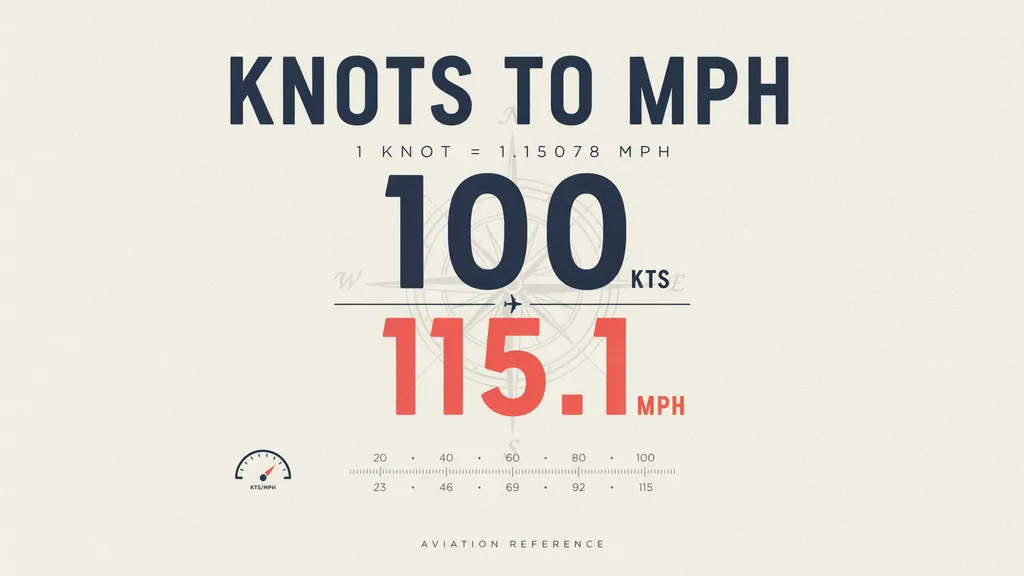
1 Knot = 1.15078 Miles Per Hour (MPH)
The term “knot” originated from ancient maritime navigation. Sailors once measured the speed of their ships by throwing a rope with evenly spaced knots into the water and counting how many knots passed overboard within a specific time period. Although modern technology has replaced this method, the term “knot” remains the international standard for marine and aviation speed measurements.
What Is MPH?
Miles per hour (MPH) measures how many statute miles are traveled in one hour. MPH is commonly used in:
- Road transportation
- Automobile speedometers
- Highway speed limits
- Running and cycling activities
- Everyday travel measurements
Countries such as the United States and the United Kingdom frequently use MPH as their primary speed measurement.
Knots to MPH Conversion Formula
The formula for converting knots to miles per hour is:
MPH = Knots × 1.15078
This conversion factor allows you to calculate any speed measurement accurately.
Example:
20 knots:
20 × 1.15078 = 23.0156 MPH
Therefore:
20 knots = 23.02 MPH
Knots to MPH Conversion Chart
| Knots | MPH |
|---|---|
| 1 Knot | 1.15 MPH |
| 5 Knots | 5.75 MPH |
| 10 Knots | 11.51 MPH |
| 15 Knots | 17.26 MPH |
| 20 Knots | 23.02 MPH |
| 25 Knots | 28.77 MPH |
| 30 Knots | 34.52 MPH |
| 40 Knots | 46.03 MPH |
| 50 Knots | 57.54 MPH |
| 60 Knots | 69.05 MPH |
| 70 Knots | 80.55 MPH |
| 80 Knots | 92.06 MPH |
| 90 Knots | 103.57 MPH |
| 100 Knots | 115.08 MPH |
| 150 Knots | 172.62 MPH |
| 200 Knots | 230.16 MPH |
| 300 Knots | 345.23 MPH |
| 500 Knots | 575.39 MPH |
Why Are Knots Used Instead of MPH?
Knots are directly related to the nautical mile, which corresponds closely to the Earth’s latitude and longitude system. This relationship makes knots particularly useful in navigation.
Aviation and marine industries prefer knots because they simplify calculations involving:
- Geographic coordinates
- Navigation charts
- Distance calculations
- International standards
- Weather and ocean forecasting
Using knots ensures consistency among pilots, sailors, meteorologists, and navigation professionals worldwide.
Practical Examples of Knots to MPH Conversion
10 Knots to MPH
10 × 1.15078 = 11.51 MPH
25 Knots to MPH
25 × 1.15078 = 28.77 MPH
50 Knots to MPH
50 × 1.15078 = 57.54 MPH
100 Knots to MPH
100 × 1.15078 = 115.08 MPH
150 Knots to MPH
150 × 1.15078 = 172.62 MPH
200 Knots to MPH
200 × 1.15078 = 230.16 MPH
These examples demonstrate how rapidly speeds increase when converted from knots to miles per hour.
Applications of Knots to MPH Conversion
Aviation
Aircraft speeds are almost always measured in knots. Pilots often need to communicate speeds internationally, and understanding MPH equivalents can help passengers and aviation students better understand aircraft performance.
Commercial airplanes commonly cruise between 450 and 500 knots, which translates to approximately 518 to 575 MPH.
Marine Navigation
Boats and ships worldwide use knots because nautical charts are based on nautical miles. Recreational boaters frequently convert knots to MPH to understand their vessel’s speed in more familiar terms.
Weather Forecasting
Meteorologists often report:
- Wind speeds
- Hurricane intensity
- Tropical storm movements
in knots. Viewers who understand MPH more readily can convert these values for easier interpretation.
Sports and Recreation
Sailing, fishing, kayaking, and competitive boating frequently involve knot measurements. Understanding their MPH equivalents helps participants assess weather conditions and travel times more accurately.
How to Estimate Knots to MPH Quickly
A simple method is:
Multiply knots by 1.15
Examples:
20 knots:
20 × 1.15 = 23 MPH
40 knots:
40 × 1.15 = 46 MPH
80 knots:
80 × 1.15 = 92 MPH
This approximation is extremely useful when quick calculations are needed.
Common Mistakes When Converting Knots to MPH
Assuming Knots and MPH Are the Same
A knot is larger than one mile per hour. Treating them as equal produces inaccurate results.
Using the Wrong Conversion Factor
Some people mistakenly multiply by 1.6, which is the conversion factor for kilometers to miles. The correct factor is:
1 Knot = 1.15078 MPH
Ignoring Decimal Precision
Professional applications in aviation and navigation require precise calculations. Small errors can create significant inaccuracies over long distances.
Benefits of Learning Knots to MPH Conversion
Learning this conversion offers several advantages:
- Better understanding of aviation speeds
- Improved interpretation of weather reports
- Enhanced boating and navigation knowledge
- Greater confidence when reading international measurements
- Faster mental calculations during travel and recreation
Understanding speed measurements helps bridge the gap between maritime, aviation, and everyday transportation systems.
Conclusion
Understanding knots to MPH conversion is an essential skill for anyone dealing with aviation, marine navigation, weather forecasting, or international speed measurements. Since one knot equals 1.15078 miles per hour, converting between these units is relatively straightforward once the formula is understood. Whether you are tracking an aircraft, monitoring hurricane winds, operating a boat, or simply satisfying your curiosity, knowing how to convert knots to miles per hour allows you to interpret speed data accurately and confidently.
By mastering the formula, memorizing key conversion values, and using the conversion chart provided in this guide, you can quickly determine the MPH equivalent of any speed measured in knots and apply this knowledge in practical, real-world situations.
Frequently Asked Questions (FAQ)
What is 1 knot in MPH?
One knot equals 1.15078 miles per hour.
How do I convert knots to MPH?
Multiply the number of knots by 1.15078.
What is 20 knots in MPH?
Twenty knots equal approximately 23.02 MPH.
What is 100 knots in MPH?
One hundred knots equal approximately 115.08 MPH.
Why do airplanes use knots instead of MPH?
Knots are based on nautical miles, making them ideal for navigation using the Earth’s coordinate system.
Are knots faster than MPH?
Yes. One knot is slightly faster than one mile per hour because one nautical mile is longer than one statute mile.
Can I estimate knots to MPH mentally?
Yes. Simply multiply knots by 1.15 for a quick approximation.
