
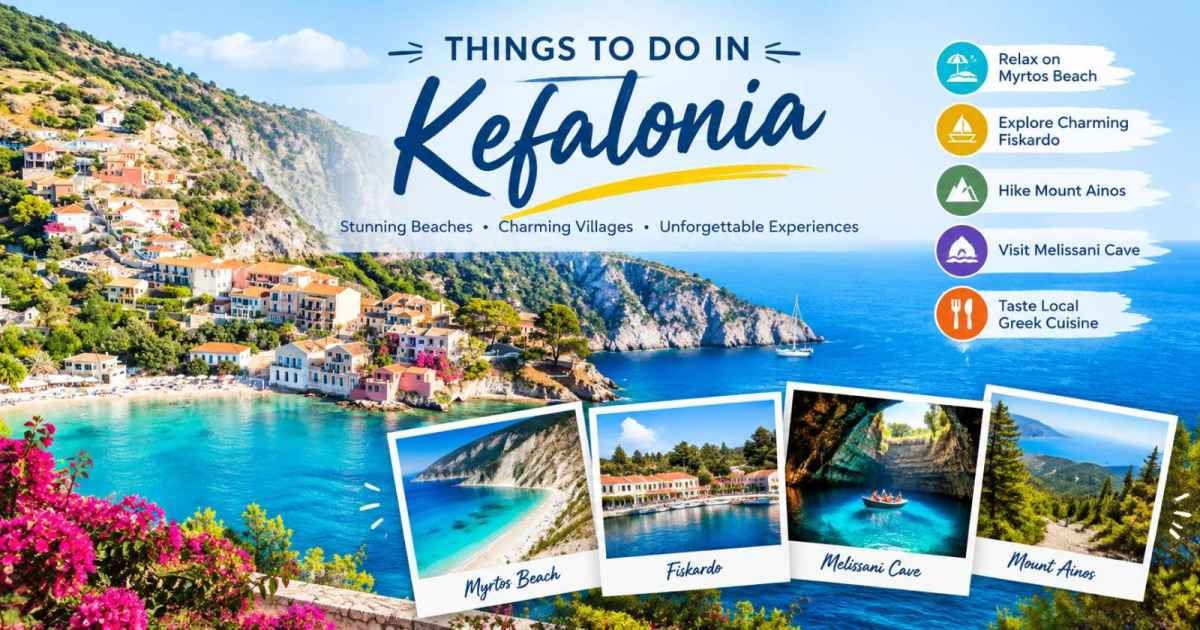
Kefalonia is one of those Greek islands that seems to offer a little bit of everything. From spectacular white-pebble beaches and impossibly blue Ionian waters to charming fishing villages, underground caves, mountain trails, historic landmarks and traditional Greek tavernas, there are countless things to do in Kefalonia. The island is the largest of the Ionian Islands, and its varied landscape means that a holiday here can be much more than simply spending your days beside the sea. You can swim at famous beaches in the morning, explore a mysterious cave in the afternoon, wander through a picturesque village before sunset and finish the day with fresh seafood and local wine overlooking the water. Kefalonia is particularly appealing to travellers who want a combination of relaxation, nature, culture and outdoor adventure in one destination.
Whether you are visiting Kefalonia for a romantic getaway, a family holiday, an active adventure or a relaxing Greek island escape, planning your itinerary can initially seem difficult because there is so much to see. The island has beautiful destinations scattered across different areas, including Argostoli, Assos, Fiskardo, Sami, Lassi and Lixouri, as well as beaches and natural attractions that are best reached by car or boat. The good news is that you do not have to choose between beaches, sightseeing and adventure. This guide to the best things to do in Kefalonia brings together the island’s most memorable attractions and experiences so you can build an itinerary that suits your travel style.
1. Visit the Famous Myrtos Beach
No list of the best things to do in Kefalonia would be complete without Myrtos Beach. Located on the northwestern side of the island, Myrtos is famous for its dramatic setting, bright white pebbles, steep green mountains and strikingly blue water. From the viewpoints above the beach, the coastline creates one of the most recognisable landscapes in Kefalonia, making it a favourite destination for photographers and first-time visitors. The beach itself is surrounded by steep slopes, which add to its spectacular appearance and make the journey down almost as memorable as the time spent beside the sea. Myrtos is one of the places that demonstrates why Kefalonia has earned such a strong reputation among travellers looking for beautiful Greek beaches.
2. Explore Melissani Lake Cave
One of the most unusual attractions in Kefalonia is Melissani Lake Cave near Sami. Unlike an ordinary cave, Melissani combines an underground lake with an open section where sunlight enters from above, creating beautiful reflections on the water. A visit here offers something completely different from the island’s beaches and coastal villages, and it is particularly memorable when the sunlight illuminates the lake. Melissani is close to Sami, making it easy to combine with other attractions in the area, including Antisamos Beach and Drogarati Cave. The cave is therefore an excellent addition to a Kefalonia itinerary, particularly for travellers who want to experience the island’s natural attractions beyond the coastline.
3. Discover Drogarati Cave
Another fascinating natural attraction near Sami is Drogarati Cave. The cave is known for its impressive stalactites and stalagmites and has a large interior that has even been used for musical performances. Exploring Drogarati gives you a chance to see a very different side of Kefalonia, away from the sunshine and beaches that dominate many travel photographs of the island. Because it is located close to Melissani Lake, visitors can conveniently visit both attractions on the same day. If you are interested in geology, nature or unusual places, adding Drogarati Cave to your list of things to do in Kefalonia is well worthwhile.
4. Wander Around the Village of Assos
Assos is one of the most picturesque villages in Kefalonia and is an ideal destination for travellers who want to experience the island’s quieter side. The village is surrounded by lush hills and sits beside a beautiful sheltered coastline, creating an atmosphere that feels very different from the larger resorts. Spend time walking through its streets, enjoying the colourful buildings and stopping at a local taverna for a meal or drink. The calm waters around the village also make it a pleasant place for swimming. Assos is especially attractive for couples and photographers because its combination of traditional architecture, greenery, sea views and relaxed atmosphere creates countless scenic viewpoints.
5. Visit the Venetian Castle of Assos
While exploring Assos, make time for the historic castle above the village. The Venetian fortress is an important reminder of Kefalonia’s long and complicated history, while its elevated position provides spectacular views across the surrounding landscape. Reaching the castle involves walking uphill, so comfortable shoes and plenty of water are useful, particularly during the warmer months. The combination of history, walking and panoramic scenery makes the castle more than simply another archaeological attraction. It is an opportunity to understand the strategic importance of the area while enjoying one of the island’s most beautiful landscapes.
6. Explore Fiskardo
Fiskardo is one of the most famous villages in northern Kefalonia and is particularly well known for its attractive harbour, waterfront restaurants and traditional architecture. Unlike many parts of Kefalonia that were heavily affected by the island’s devastating 1953 earthquake, Fiskardo retains much of its historic character. Walking along the harbour is one of the easiest and most enjoyable things to do here, especially in the evening when the waterfront becomes lively with visitors enjoying dinner and drinks. You can browse small shops, sit beside the water, watch boats arrive and depart, and explore the surrounding streets at a relaxed pace. Fiskardo is also an excellent starting point for exploring northern Kefalonia by boat.
7. Spend Time in Argostoli
Argostoli is the capital and largest populated area of Kefalonia, making it an important stop for travellers who want to experience the island’s everyday life as well as its tourist attractions. The town offers shops, restaurants, cafés, waterfront walks and cultural sights, providing a different experience from the smaller villages. One of the notable landmarks is the De Bosset Bridge, which crosses the Koutavos Lagoon. Argostoli is also a convenient base for exploring nearby destinations, particularly if you want access to restaurants and services while still being within easy driving distance of beaches and other attractions.
8. Walk Along the Waterfront in Sami
Sami is another excellent destination for your Kefalonia itinerary, particularly if you enjoy relaxed waterfront walks, restaurants and boat trips. The town has a long, relatively flat quayside where you can stroll beside the water, stop for lunch and watch boats in the harbour. Sami is also strategically located close to several major attractions, including Melissani Lake, Drogarati Cave and Antisamos Beach. This makes it particularly convenient for visitors who want to combine sightseeing with time at the coast.
9. Swim at Antisamos Beach
Antisamos Beach is one of the most beautiful beaches near Sami and is surrounded by green hills that contrast beautifully with the clear blue water. Its white-pebble shoreline and lush setting create a classic Ionian island landscape. The beach is also associated with the film Captain Corelli’s Mandolin, which brought parts of Kefalonia to the attention of an international audience. Antisamos is an excellent choice for swimming, relaxing and enjoying the scenery, and its location makes it easy to combine with a visit to Sami, Melissani Lake or Drogarati Cave.
10. Relax on Makris Gialos Beach
If you are staying around Lassi, Makris Gialos is one of the beaches you should consider visiting. The beach has soft sand, clear water and a gentle entry into the sea, making it appealing to travellers who prefer sandy beaches. There are also facilities nearby, including places where visitors can find refreshments and water activities. Because Lassi is one of Kefalonia’s popular resort areas, Makris Gialos can become busy during the summer, but its convenient location and beautiful coastline make it a popular choice for a traditional beach day.
11. Enjoy Platis Gialos Beach
Another popular beach near Lassi is Platis Gialos. Together with Makris Gialos, it offers visitors an easy way to enjoy the beautiful coastline without travelling far from the resort area. The beach is particularly suitable for travellers who want a combination of swimming, sunbathing and access to nearby restaurants and accommodation. If your idea of a Greek island holiday involves spending a significant amount of time by the sea while still being close to a lively resort, Lassi and its surrounding beaches are worth considering.
12. Hike in Ainos National Park
Kefalonia is not only about beaches, and Ainos National Park is proof of that. Located around Mount Ainos, the park offers opportunities for hiking and enjoying the island’s mountainous landscape. Mount Ainos reaches 1,628 metres and is the highest peak in the Ionian Islands. The area is also associated with the native Kefalonian fir, while visitors may encounter the island’s distinctive semi-wild horses in parts of the mountain. Hiking in Ainos National Park is an excellent choice for travellers who want cooler mountain scenery, panoramic views and a break from the coastal resorts.
13. Go Hiking in Kefalonia
Kefalonia has walking routes ranging from relatively gentle trails to more demanding mountain and coastal hikes. Some routes lead through green landscapes, valleys and olive groves, while others take adventurous travellers toward secluded beaches and rugged sections of coastline. The Greek National Tourism Organisation highlights hiking, cycling, climbing, coasteering and other outdoor activities as part of the island’s adventure possibilities. If you enjoy exploring destinations on foot rather than simply driving between attractions, consider dedicating at least one day of your trip to hiking.
14. Take a Boat Trip Around Kefalonia
One of the best ways to appreciate Kefalonia’s coastline is from the water. A boat trip allows you to see cliffs, coves and beaches from a completely different perspective and can provide access to coastal areas that are difficult or impossible to reach by road. Depending on the type of excursion you choose, you may spend the day swimming in secluded bays, snorkelling in clear water or visiting several coastal destinations. Private boat hire can offer additional flexibility, while organised excursions can be a convenient option for visitors who prefer not to plan everything themselves.
15. Try Kayaking or Stand-Up Paddleboarding
The clear waters around Kefalonia create excellent conditions for water-based activities such as kayaking and stand-up paddleboarding. These activities are particularly appealing because they allow you to explore the coastline at a slower pace than a motorboat while still reaching small coves and quiet sections of shoreline. The island’s official tourism information highlights kayaking and SUP among its outdoor experiences, with routes suitable for different levels of ability.
16. Go Snorkelling
You do not need to be an experienced diver to enjoy Kefalonia’s underwater world. Snorkelling is an easy way to explore the clear coastal waters and observe marine life around rocky shorelines and quieter beaches. Koutsoupia Beach near Sami, for example, is noted for its clear water and fish, making it an appealing location for snorkelling. Bring your own mask and snorkel or check whether equipment is available locally before heading to the beach.
17. Try Scuba Diving
For experienced divers or travellers looking to try something more adventurous, scuba diving is another activity to consider. Kefalonia’s coastline offers opportunities to explore underwater landscapes, and the waters around areas such as Agia Efimia and Skala are highlighted for diving experiences. The waters around the island also contain historical underwater sites, including the wreck of the British submarine Perseus. Diving should always be undertaken with an appropriate professional operator and according to local conditions and safety requirements.
18. Discover Ancient Sami
History lovers should include Ancient Sami in their Kefalonia itinerary. The ancient settlement was one of the four city-states that formed the Cephalonian Tetrapolis and flourished during the Classical and Hellenistic periods. Today, visitors can explore the remains and enjoy elevated views across the surrounding landscape. Combining Ancient Sami with nearby Melissani Lake, Drogarati Cave and Antisamos Beach makes it possible to experience several very different sides of the area in a single day.
19. Visit the Monastery of Saint Gerasimos
The Monastery of Saint Gerasimos is an important religious site and one of the cultural landmarks worth adding to a Kefalonia sightseeing itinerary. Saint Gerasimos is the patron saint of Kefalonia, and the monastery has significant importance for local religious life. Visiting the monastery provides a cultural experience that complements the island’s beaches and natural attractions. Remember that religious sites are places of worship, so visitors should dress respectfully and follow any rules in place when entering.
20. Explore Lixouri and the Paliki Peninsula
Lixouri is the largest settlement on the Paliki Peninsula and provides a different atmosphere from Argostoli and the eastern side of Kefalonia. The town has restaurants, cafés, shops and a marina, while the surrounding peninsula offers beaches and scenic countryside. You can reach Lixouri by road or by the regular ferry connection from Argostoli, making the journey itself part of the experience. Spending a day exploring Lixouri and the Paliki Peninsula can be a good way to escape the busiest tourist routes and discover another character of Kefalonia.
21. Taste Traditional Kefalonian Food
Food should be an important part of any Kefalonia holiday. Rather than treating meals simply as something to fit between sightseeing stops, set aside time to enjoy traditional Greek and Kefalonian dishes in local tavernas. Look for menus featuring fresh fish and seafood, local cheeses, meat dishes, vegetables, olive oil and regional specialities. Waterfront restaurants in places such as Fiskardo, Sami and Argostoli can be particularly enjoyable when combined with an evening stroll. Trying local food is also one of the easiest ways to slow down and experience the island beyond its famous beaches.
22. Enjoy a Sunset by the Ionian Sea
Kefalonia’s western coastline provides plenty of opportunities to enjoy beautiful sunsets. Instead of rushing back to your accommodation after a day of sightseeing, choose a coastal viewpoint, beach or taverna where you can watch the sky change colour over the Ionian Sea. Sunset is also an ideal time for photography because the softer light can transform the island’s cliffs, villages and beaches. A relaxed sunset experience can become one of the most memorable moments of your trip without requiring an expensive tour or complicated itinerary.
23. Explore Kefalonia’s Hidden Beaches
Although Myrtos, Antisamos and the beaches around Lassi receive much of the attention, Kefalonia has many smaller coves and less crowded stretches of coastline. Some are accessible by road or footpaths, while others are best reached from the sea. If you have several days on the island, consider setting aside time to explore beyond the most famous beaches. Hiking and boat trips can be especially useful for discovering quieter coastal areas. The Greek tourism authority notes that the island has walking routes leading toward beaches such as Fteri and Koutsoupia, illustrating how some of Kefalonia’s coastal treasures require a little more effort to reach.
24. Visit the Villages Around Kefalonia
One of the best ways to understand Kefalonia is to explore its villages rather than spending your entire holiday in a single resort. Assos offers a postcard-like coastal setting, Fiskardo combines historic architecture with a lively harbour, Sami provides an easygoing waterfront atmosphere, while smaller inland settlements reveal a quieter side of island life. Driving through the countryside allows you to discover traditional homes, churches, olive groves and mountain scenery that are easy to miss when following only the main tourist route.
25. Take a Day Trip to Ithaca
If you have enough time in Kefalonia, consider taking a day trip to nearby Ithaca. Sami is one of the island’s departure points for ferries to Ithaca, making it a convenient option for travellers staying in the surrounding area. Ithaca is famous in Greek mythology as the homeland of Odysseus and offers its own villages, beaches and landscapes to explore. Check current ferry schedules before planning the excursion because services can vary according to the season and operating conditions.
26. Go Paragliding Over the Coast
For travellers looking for an adrenaline-filled experience, paragliding around the Myrtos area can provide an unforgettable perspective of the coastline. Seeing the Ionian Sea, cliffs and beaches from above is very different from viewing them from a roadside viewpoint. Paragliding should only be undertaken with qualified professionals and suitable weather conditions, but for adventurous visitors it can be one of the most memorable things to do in Kefalonia. The official Greek tourism site lists paragliding around the slopes of Myrtos among the island’s outdoor activities.
27. Try Horse Riding in the Countryside
Horse riding offers a slower and more peaceful way to explore Kefalonia’s natural surroundings. Guided rides can take visitors along easy trails and through rural landscapes, making the activity suitable for people who want something different from beach days and sightseeing. The island’s outdoor tourism offerings include horse riding along easier trails, making it an option for families and travellers who want a gentle countryside experience.
28. Explore the Island by Car
Renting a car is one of the most practical ways to experience many of the best things to do in Kefalonia because attractions are spread across a relatively large island. Having your own vehicle makes it easier to combine beaches, villages, caves and viewpoints without depending entirely on organised excursions. A road trip can take you from Argostoli toward Myrtos and Assos, across to Sami and Antisamos, or north toward Fiskardo. The mountainous terrain means that journeys can sometimes take longer than they appear on a map, so allow plenty of time and avoid trying to visit too many distant attractions in one day.
29. Photograph Kefalonia’s Scenic Viewpoints
Kefalonia is an excellent destination for landscape photography. Some of the island’s best photographs come from viewpoints above beaches such as Myrtos, but there are also beautiful scenes around Assos, Fiskardo, mountain roads, harbours and villages. You do not need professional photography equipment to capture memorable images; early morning and late afternoon generally provide softer light and fewer harsh shadows. If photography is important to you, allow extra time at viewpoints rather than treating them as five-minute stops between attractions.
30. Slow Down and Enjoy the Kefalonian Lifestyle
Perhaps the most underrated thing to do in Kefalonia is simply slow down. With so many beaches, caves, villages and outdoor activities, it is tempting to create an exhausting itinerary that tries to cover the entire island. Instead, leave room for long lunches, quiet swims, sunset walks and spontaneous stops at places that catch your attention. Kefalonia’s appeal is not only its famous attractions but also the relaxed combination of sea, mountains, food and village life. Sometimes the best holiday memories come from an unplanned coffee beside a harbour or an evening meal overlooking the water.
Best Places to Visit in Kefalonia for First-Time Visitors
If you are visiting Kefalonia for the first time and do not have enough time to see everything, concentrate on a handful of destinations that represent different sides of the island. Myrtos Beach is the obvious choice for spectacular coastal scenery, while Melissani Lake and Drogarati Cave provide two of the island’s most distinctive natural attractions. Assos is ideal for a scenic village experience, Fiskardo offers a beautiful northern harbour and traditional architecture, and Argostoli gives you a chance to experience the island’s main town. Sami is another useful base because several important attractions are located nearby.
Best Beaches in Kefalonia
Kefalonia’s beaches are among the biggest reasons people visit the island, but they are not all the same. Myrtos is famous for its dramatic setting and white pebbles, Antisamos combines clear water with lush green hills, while Makris Gialos and Platis Gialos near Lassi offer sandy beaches and convenient facilities. Travellers who prefer quieter experiences can investigate smaller coves and beaches that require a little more driving, walking or a boat trip to reach. Because the island has such a varied coastline, it is worth visiting several beaches rather than spending your entire holiday at one location.
Best Outdoor Activities in Kefalonia
Kefalonia is an excellent destination for active travellers. Depending on your interests and experience, you can go hiking, kayaking, stand-up paddleboarding, snorkelling, scuba diving, climbing, coasteering, cycling, mountain biking, horse riding or paragliding. The island’s mountains and coastline create opportunities for both gentle outdoor experiences and more demanding adventures. Mount Ainos is particularly appealing to hikers, while the sea provides opportunities for water sports and boat-based exploration.
How Many Days Do You Need in Kefalonia?
For a first visit, around five to seven days gives you enough time to experience several of Kefalonia’s major attractions without rushing constantly from one destination to another. A shorter three- or four-day trip can still work if you concentrate on one part of the island, such as Argostoli and Lassi or Sami and the surrounding attractions. If you have a week or longer, you can explore more beaches, spend time in Assos and Fiskardo, visit mountain areas, take a boat trip and dedicate some days simply to relaxing. Because Kefalonia is large and attractions are spread out, adding extra days can significantly improve the pace of your holiday.
Best Time to Visit Kefalonia
The summer months are popular for beach holidays because of the warm weather and lively atmosphere, but the busiest period can also mean more visitors at famous attractions and beaches. Late spring and early autumn can be appealing for travellers who prefer a more relaxed atmosphere and want to combine sightseeing and outdoor activities with pleasant weather. If your priority is swimming and traditional summer beach life, the main summer season is the obvious choice, while hikers and travellers interested in exploring the countryside may prefer periods with milder temperatures. Always check current local conditions and opening hours before travelling because seasonal services can change.
Final Thoughts on the Best Things to Do in Kefalonia
Kefalonia is much more than a destination for beautiful beaches. Its greatest strength is the variety of experiences available across the island. You can begin your morning looking over the dramatic coastline at Myrtos Beach, explore the underground waters of Melissani Lake, walk through the picturesque streets of Assos, have lunch beside the harbour in Fiskardo, hike through the mountains of Ainos and finish the day watching the sunset over the Ionian Sea. Add traditional food, historic sites, boat trips, snorkelling and quiet villages, and it becomes easy to understand why Kefalonia is such a rewarding Greek island to explore.
The best itinerary is not necessarily the one that contains the largest number of attractions. Give yourself time to enjoy the places you visit, and do not be afraid to leave part of your schedule open. Kefalonia rewards curious travellers who are willing to drive beyond the obvious tourist stops, explore smaller villages, discover quieter beaches and sit down for a long Greek meal. Whether you are searching for the best beaches in Kefalonia, natural attractions, outdoor adventures, romantic places or family-friendly activities, this Ionian island has enough variety to make a holiday memorable.
Frequently Asked Questions About Things to Do in Kefalonia
What are the best things to do in Kefalonia?
Some of the best things to do in Kefalonia include visiting Myrtos Beach, exploring Melissani Lake Cave and Drogarati Cave, walking around Assos and Fiskardo, exploring Argostoli and Sami, visiting Antisamos Beach, hiking around Mount Ainos, taking a boat trip and trying local Greek food. The island offers a combination of beaches, natural attractions, villages, history and outdoor activities, so the best experiences depend on your interests.
Is Kefalonia worth visiting?
Yes, Kefalonia is well worth visiting for travellers who want more than a typical beach holiday. The island combines dramatic scenery, clear Ionian waters, attractive villages, caves, mountains, historical sites and outdoor activities. Its size also means that you can create very different itineraries depending on whether you prefer relaxation, adventure, sightseeing, food or nature.
What is Kefalonia famous for?
Kefalonia is particularly famous for Myrtos Beach, its turquoise waters, Melissani Lake Cave, Mount Ainos, picturesque villages such as Assos and Fiskardo, and its diverse coastline. The island is also known for outdoor activities including hiking, kayaking, diving and other water sports.
What is the most beautiful place in Kefalonia?
There is no single answer because beauty is subjective, but Myrtos Beach is arguably the island’s most iconic landscape. Assos is another favourite because of its colourful village, surrounding hills and calm coastal setting, while Fiskardo is especially attractive for visitors who enjoy historic architecture and harbour scenery.
How many days are enough for Kefalonia?
Five to seven days is a good starting point for a first visit because it gives you enough time to visit major attractions while also having several relaxed beach days. If you want to explore more remote beaches, hike in Ainos National Park, take a day trip to Ithaca and explore more villages, staying for a week or longer is even better.
Do you need a car in Kefalonia?
A car is not absolutely essential, but it can make exploring Kefalonia considerably easier. Many of the island’s best beaches, villages and natural attractions are spread across different areas, and having a car gives you greater flexibility. If you do not drive, organised excursions, taxis, buses and boat trips can still allow you to visit many popular attractions.
What are the best beaches in Kefalonia?
Myrtos Beach, Antisamos Beach, Makris Gialos and Platis Gialos are among the beaches that should be considered when planning a Kefalonia holiday. They offer different experiences, from Myrtos’s dramatic scenery and white pebbles to the sandy and accessible beaches around Lassi.
Is Kefalonia good for families?
Yes. Families can enjoy the island’s beaches, swimming, boat trips, gentle walks, sightseeing and quieter villages. Beaches with easier access and nearby facilities can be particularly convenient for families, while activities such as horse riding and gentle outdoor excursions provide alternatives to spending the entire day at the beach.
Is Kefalonia good for couples?
Kefalonia can be an excellent destination for couples. Romantic experiences include watching sunsets, exploring Assos and Fiskardo, taking a private or small-group boat trip, enjoying a long dinner beside the sea and discovering quieter beaches. Couples who enjoy adventure can also combine these experiences with hiking, kayaking or other outdoor activities.
What should you not miss in Kefalonia?
If you have limited time, try not to miss Myrtos Beach, Melissani Lake Cave, Assos, Fiskardo, Antisamos Beach and at least one of the island’s major towns such as Argostoli or Sami. If you enjoy nature and hiking, add Mount Ainos to your itinerary. These attractions together provide a good introduction to Kefalonia’s beaches, villages, natural landscapes and culture.
What food should you try in Kefalonia?
During your visit, look for traditional Greek and local Kefalonian dishes featuring fresh seafood, local cheese, vegetables, meat and olive oil. Eating at local tavernas is an important part of the island experience, particularly in harbour towns and villages where you can combine dinner with views of the Ionian Sea.
Can you visit Kefalonia without a car?
Yes, although your options may be more limited. Staying in a well-connected area such as Argostoli or Lassi can make it easier to access restaurants, beaches and services, while organised tours and boat trips can take you to major attractions. However, renting a car provides much greater freedom if your goal is to explore different parts of the island independently.
What are the best outdoor activities in Kefalonia?
Popular outdoor activities include hiking, kayaking, stand-up paddleboarding, snorkelling, scuba diving, cycling, mountain biking, horse riding, climbing, coasteering and paragliding. Kefalonia’s combination of mountains and coastline makes it particularly suitable for travellers who enjoy active holidays.
Is Kefalonia expensive?
The cost of a Kefalonia holiday depends heavily on your accommodation, travel dates, transportation and choice of restaurants and activities. Travelling during the busiest summer period can cost more, while choosing local tavernas, booking accommodation in advance and travelling outside peak periods may help manage your budget.
What makes Kefalonia different from other Greek islands?
Kefalonia stands out because of its combination of dramatic mountains, lush landscapes, caves, spectacular beaches, traditional villages and a relatively large geographic area. Instead of offering only one type of holiday experience, it allows travellers to combine beach relaxation, nature, adventure, history and food within the same trip.
Conclusion
The best things to do in Kefalonia are not limited to ticking famous attractions off a sightseeing list. The island is best experienced as a combination of places and moments: swimming in clear Ionian water, standing above Myrtos Beach, exploring the mysterious Melissani Cave, wandering through Assos, watching boats in Fiskardo, tasting local food in a family-run taverna and discovering quiet roads through the mountains. Whether you have a few days or a full week, Kefalonia offers enough variety to create a memorable Greek island holiday.
If you are planning your first trip, start with the island’s signature attractions and then leave room for spontaneous discoveries. Visit the famous beaches, but also explore the villages. See the caves, but spend time outdoors. Try the popular restaurants, but also look for smaller local tavernas. Most importantly, do not rush. Kefalonia’s landscapes are spectacular, but its real charm comes from taking the time to experience the island at a slower pace.
